Cumha roughly translates as grief, longing, the ache of absence. An Irish word that names something that doesn’t translate cleanly. This is its journal.
The work begins with plants that thrive in hostile environments and moves to lichen: the organism that doesn’t merely survive difficult conditions but belongs in them. That is the lens. Diaspora, inherited memory, connection to land. What persists. What forms in the threshold between culture, language, and place carried at a distance.
This journal holds field notes, photographs, hand-drawn maps, drawings, and thinking in progress. It follows a practice rather than moving toward a conclusion. The first fieldwork was carried out in Donegal, June 2025.
Solas Diaga
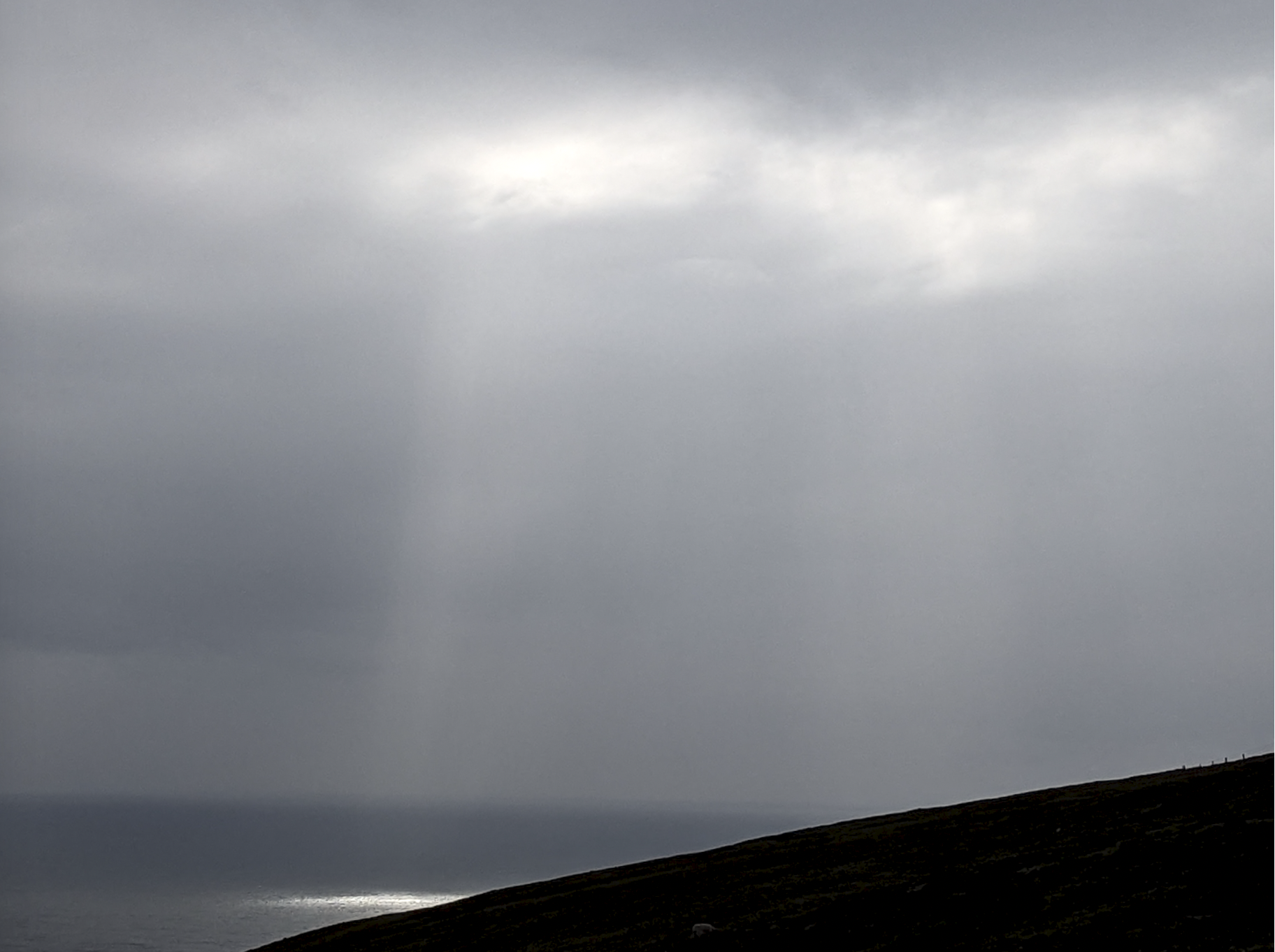
Glencolmcille, Donegal, 2026
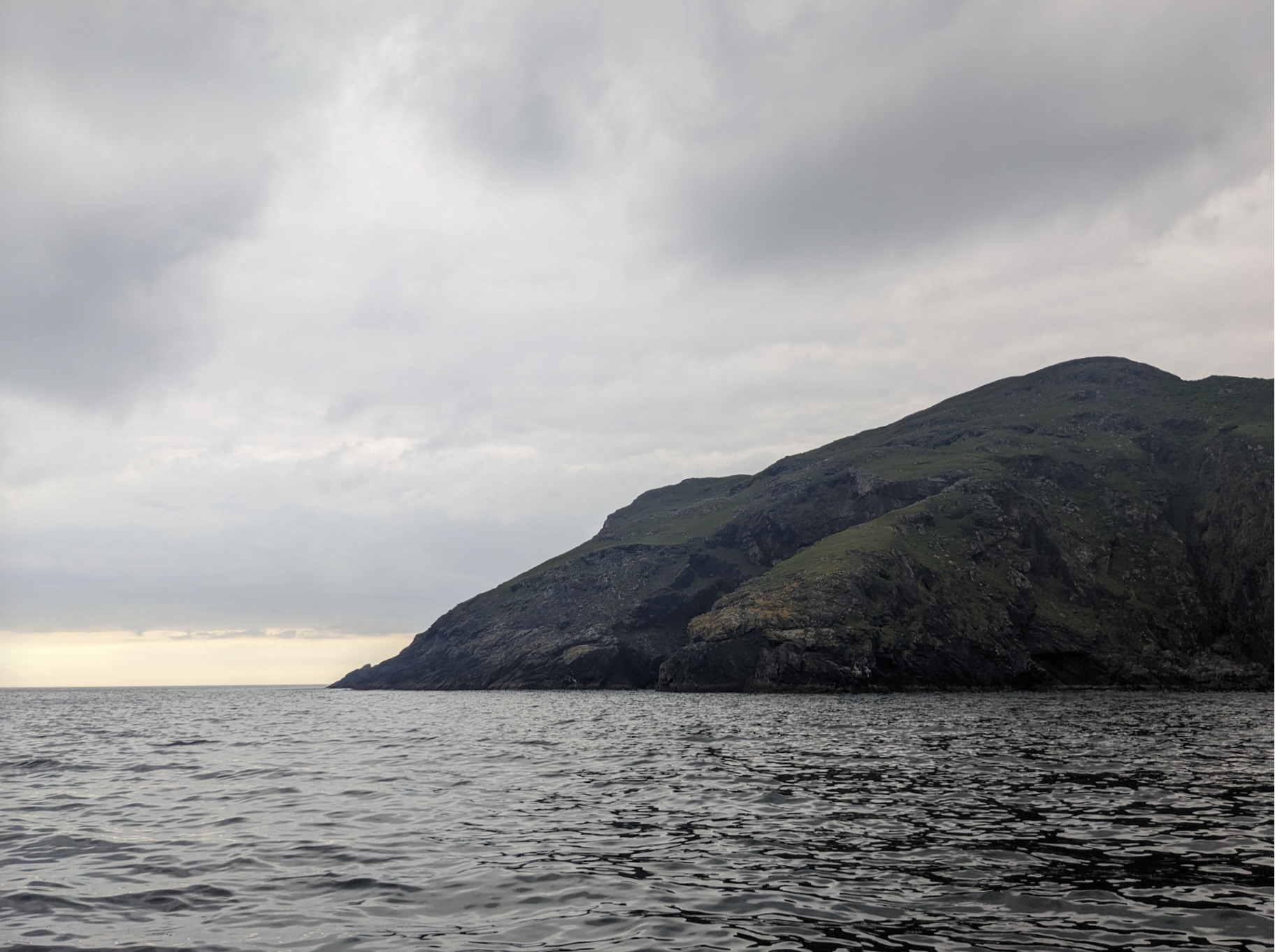
Sliabh Liag, Donegal, 2026
Clapsholas: last light, half-light, the threshold between visibility and dark.
Solas Diaga: divine light, the light that arrives when ordinary light fails.
Solas na nAingeal: the light of the angels, the afterglow that remains in the sky after the sun has gone, when the source is no longer visible but its trace persists.
The Atlantic coast at dusk holds all three simultaneously. This is the light Cumha moves in. A threshold light.
Those That Walked Before Me
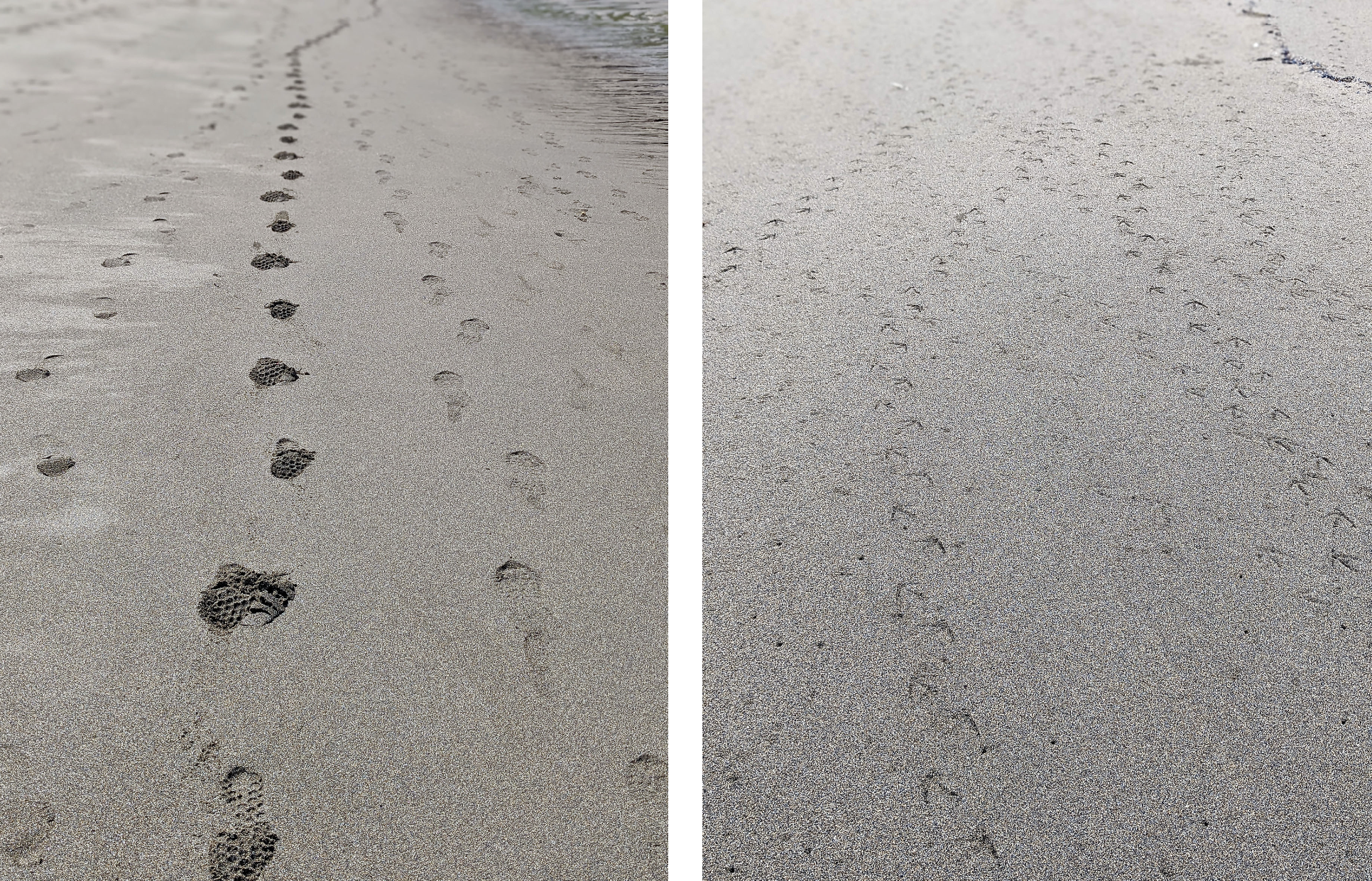
Glencolmcille, Donegal (2026)
A beach holds its own record, briefly, before the tide returns. Footprints in sand are the most provisional of traces, human, animal, invertebrate, through the same threshold between land and sea, each leaving a mark that will not last. I‘m interested in that impermanence: the trace as evidence of presence, the surface as temporary archive. The sea took people and didn’t return them. These footprints will be soon gone. The lichen on the rock above the tide line has been there for centuries. Both are traces. Only one of them stays.
After Robinson
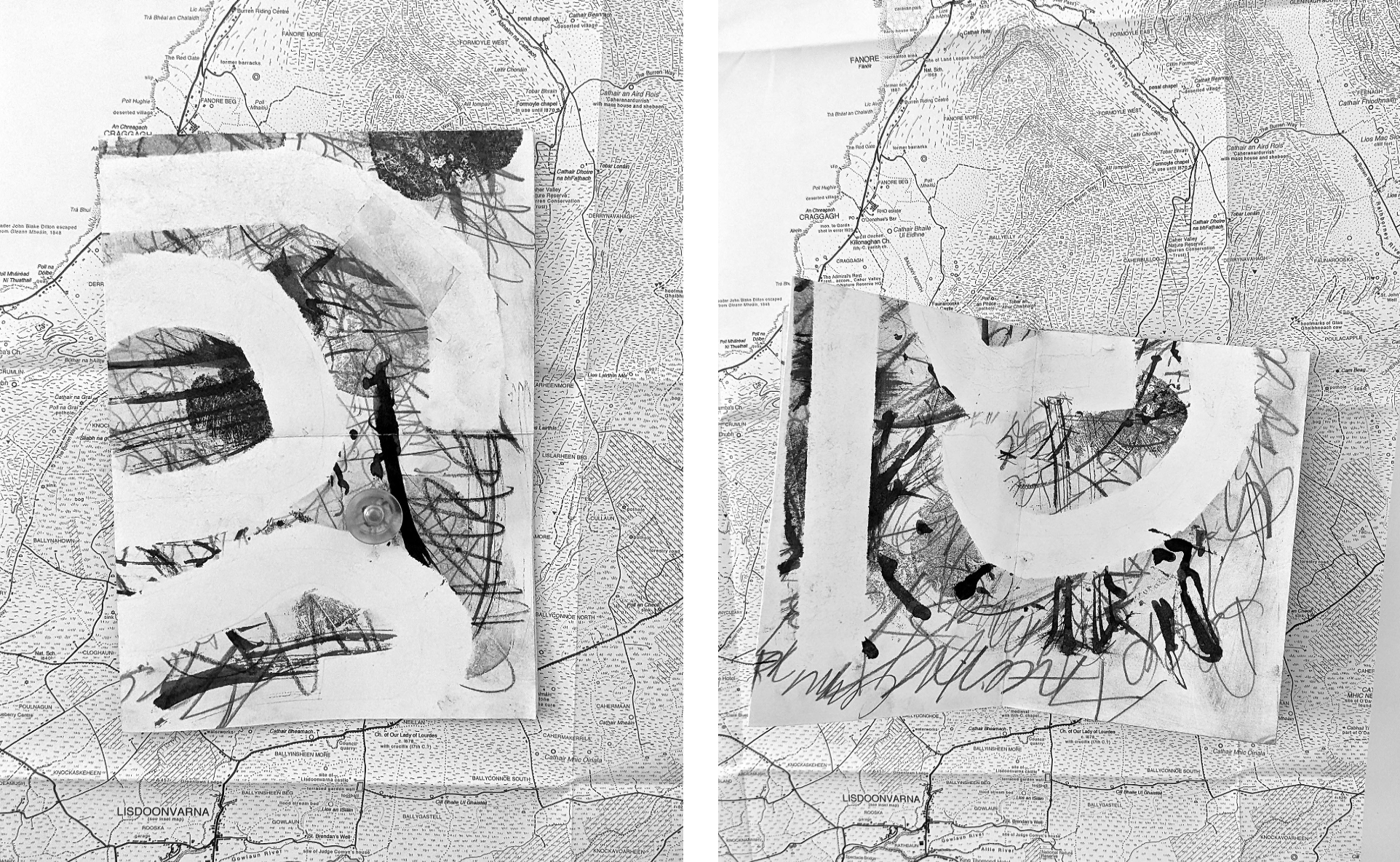 Tim Robinson’s decades-long mapping of the west of Ireland reveals the significance of place names and the land’s memories. Here his Burren map is a testament to sustained attention, every contour and annotation a record of patient observation. These images overlay my own hand-drawn mark-making. The marks carry Cumha’s themes: diaspora, memory, threshold, landscape and language. In black and white, place specifics dissolve, leaving only line, surface, and layering; one way of seeing against another.
Mapping the Terrain
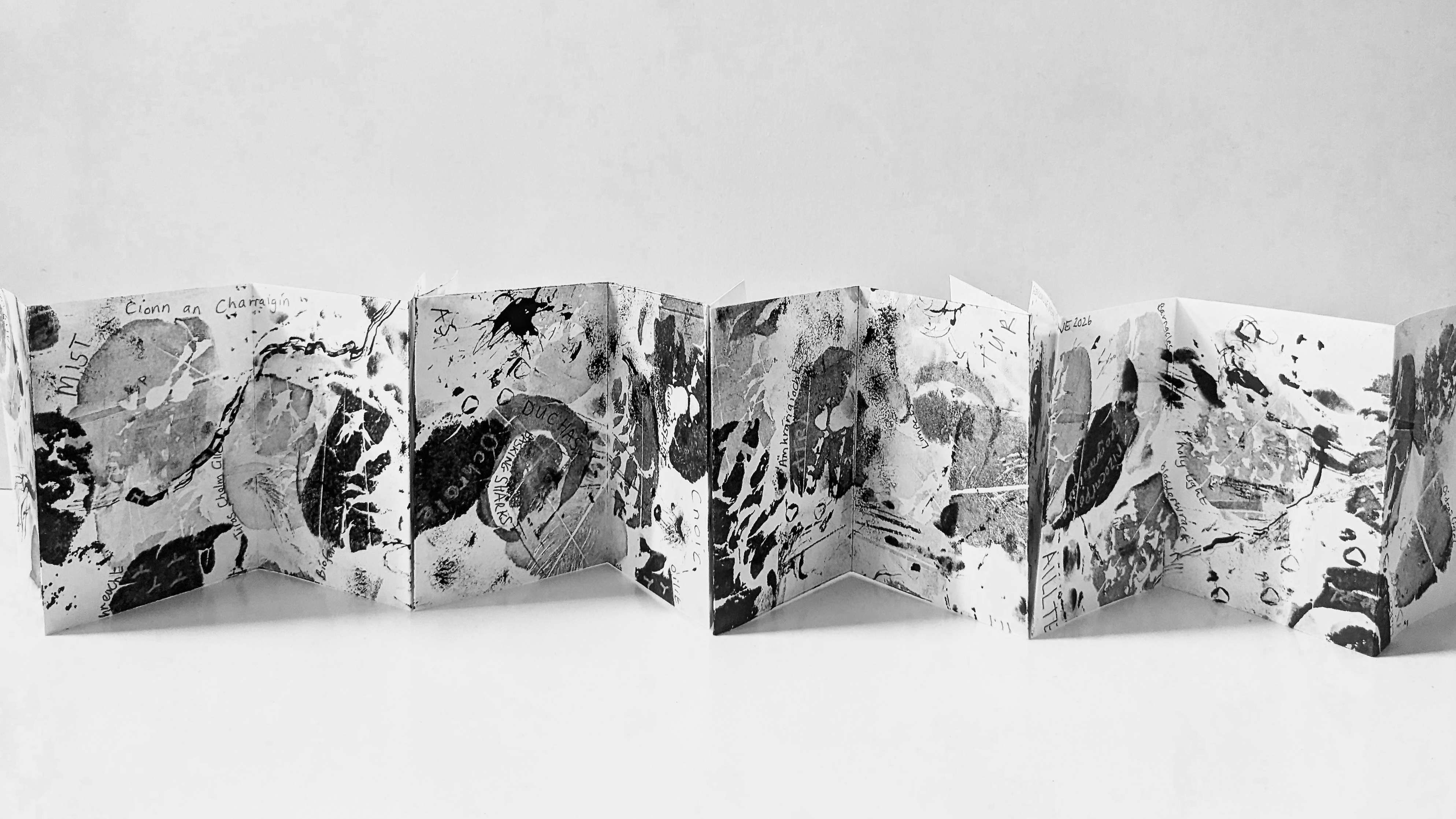
Experimenting with the form and structure of memory maps (2026).
Observing Lichen
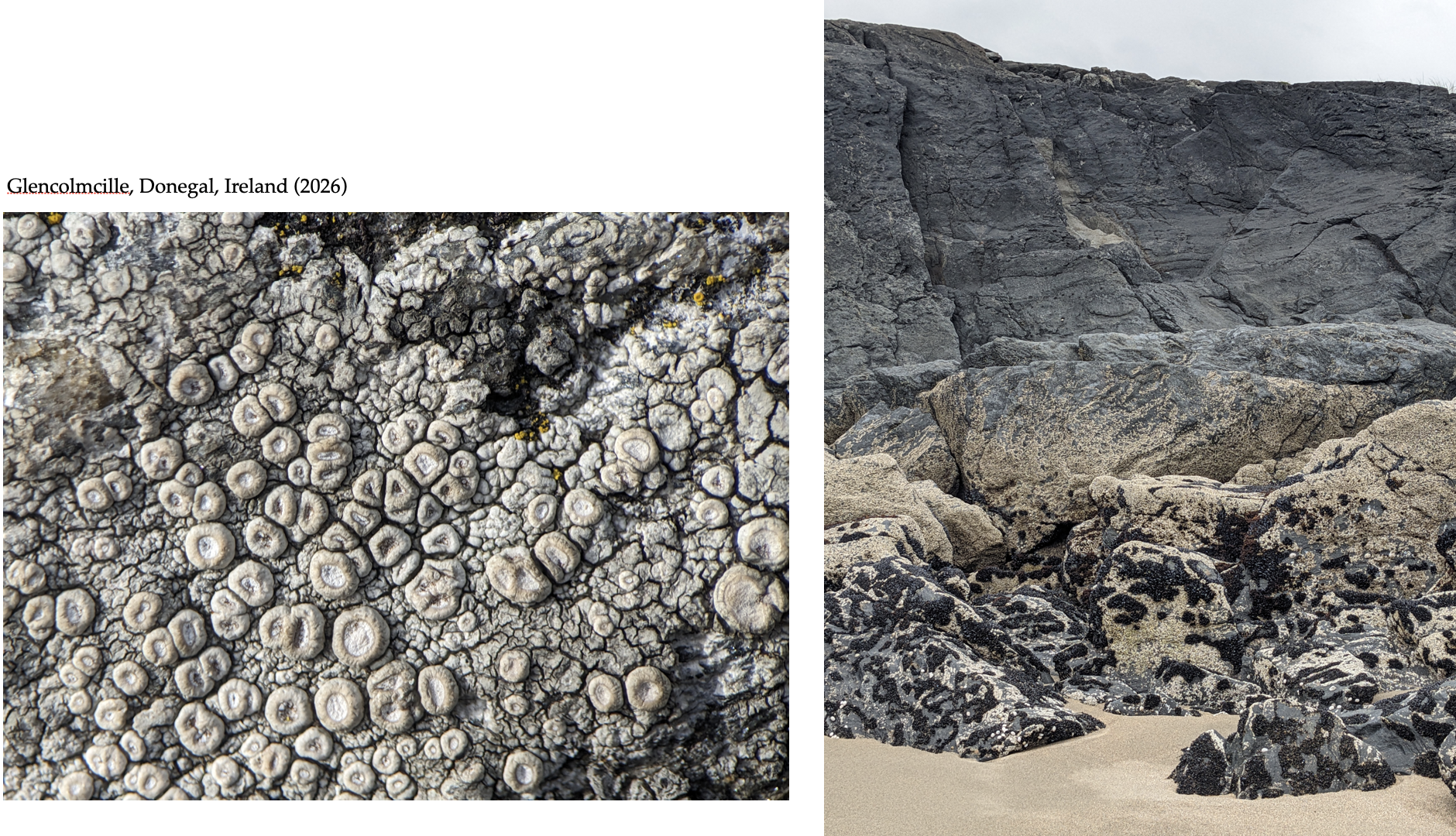 Ochrolechia parella grows on the schist rock along the coast at Glencolmcille, the same genus as crotal, the lichen harvested to dye wool, knowledge held by women and passed between hands until it wasn’t. My ancestors would have known this lichen not by its Latin name but by what it yielded. That knowledge was lost. The lichen is still here. It will outlast everything we remember.
Edge Dwellers

 Glencolmcille, Donegal, Ireland (2025)


Rudaí Fiáine


 Rudaí Fiáine grows out of the bond between land and people that runs through Irish culture. My ancestors history is shaped by dispossession, by the famine, by migration. Yet what survived was language, songs, stories and rituals that carried meaning when little else did.
When I walk these roadside verges, I notice the wild plants forcing their way through tarmac and stone. They shouldn’t thrive, but they do. These plants show up in our folklore and old sayings too, they’ve always been part of how we read the land, how we remember. For me they stand as reminders of both the difficulty and the endurance, the struggle and the survival.
Donegal, Ireland (2025)